Who can be sued after a commercial truck crash? One of the most important questions an injured person can ask after a collision. And the answer is almost always: more parties than you think.
In 2024, according to TxDOT’s 2024 Commercial Motor Vehicle Crash Report, Texas saw 39,393 commercial vehicle crashes. These accidents led to 608 deaths and left more than 1,600 people with serious injuries.
Dallas County reported 3,857 truck crashes that year, including 29 fatalities, making it one of the most dangerous counties in Texas for commercial vehicle collisions.
When an 80,000-pound truck collides with a passenger vehicle, the outcome is almost always devastating. Unlike a typical car accident, legal responsibility for these injuries usually involves more than one party.
Why Truck Crash Liability Is Different in Texas
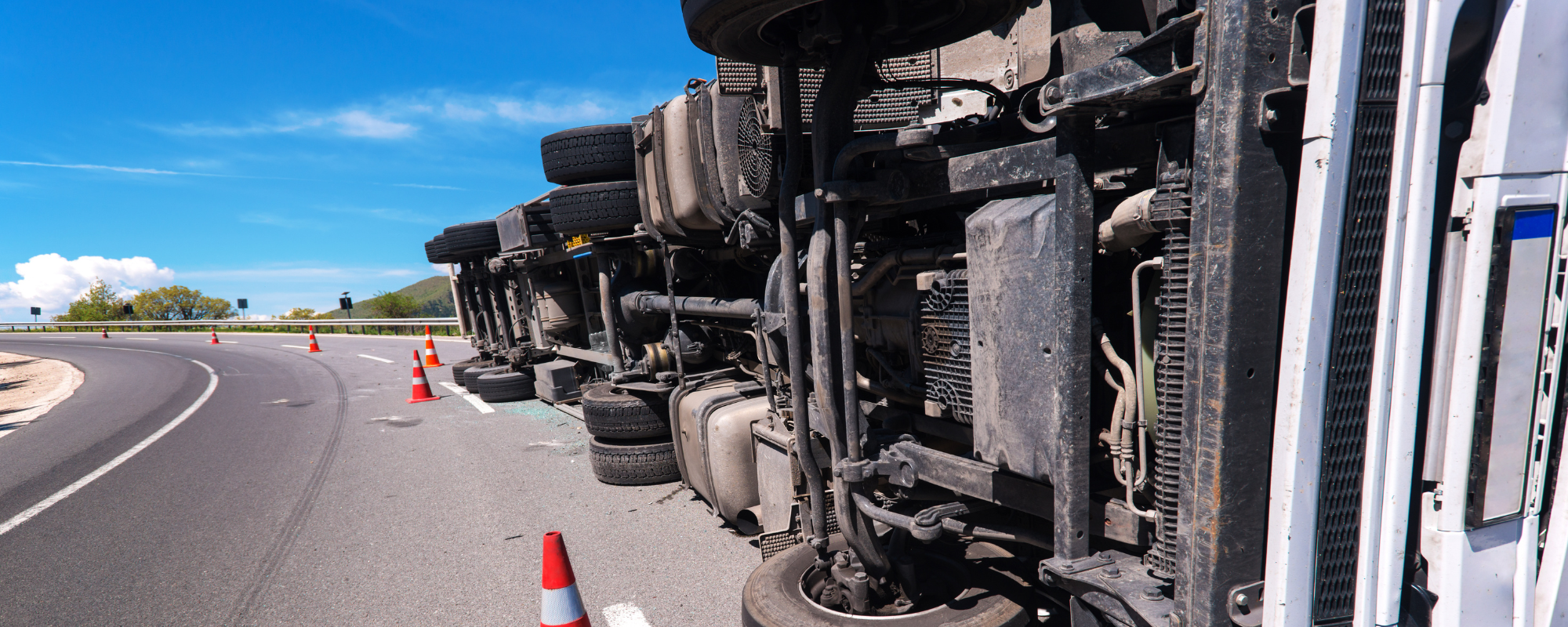
Commercial truck accidents are more complicated than regular car accidents because they involve several layers of responsibility.
Federal FMCSA regulations, Texas state law, and rules about vicarious liability all come together, so more than one party can be at fault at the same time.
Texas uses a modified comparative negligence rule. If you are less than 51% responsible for the crash, you can still get compensation, but the amount is reduced by your share of fault.
Insurance defense teams often use this rule to their advantage, so it is important to identify every liable party from the start.
If you are found to be 51% or more at fault for the crash, you cannot recover any damages. For most Texas truck accident claims, you have two years from the date of the crash to file. Some claims, especially those involving government entities, have shorter deadlines. If you miss these deadlines, you lose your right to recover compensation.
Who Can Be Sued After a Commercial Truck Crash in Texas?
Finding everyone who played a role in the crash can mean the difference between a limited recovery and a full one. Here’s what you need to know.
1. The Truck Driver
The driver is usually the first focus in any truck accident investigation. Commercial drivers must follow FMCSA Hours of Service rules, which limit driving to 11 hours in a 14-hour period and require rest breaks. Breaking these rules can show negligence.
Driver liability commonly arises from:
| Driver Conduct | Why It Creates Liability |
|---|---|
| Fatigued driving | Hours-of-service violations establish impaired judgment and slower reaction times, direct evidence of negligence |
| Distracted driving | FMCSA prohibits handheld device use, cell phone records, and telematics data can prove distraction at the moment of impact |
| Impaired driving | Alcohol or controlled substance violations support both direct negligence claims and potential punitive damages in Texas |
| Falsified logbooks | Discrepancies between paper logs and electronic logging device data reveal deliberate regulatory violations |
| Excessive speed | Speed-related violations are among the most common causes of serious truck crashes in Texas and are documented in black box data |
However, driver liability rarely exists in isolation. In most serious truck accident cases, the driver’s conduct also implicates the company behind them.
2. The Trucking Company
Trucking companies are often the main defendants in commercial truck crash cases and usually have the most at stake. With vicarious liability, an employer is legally responsible for a driver’s negligent actions committed while working.
In addition, trucking companies can be directly liable for their own mistakes, such as not hiring qualified drivers, ignoring safety violations, setting delivery schedules that force drivers to work past legal hours, or not maintaining their trucks.
Trucking companies often try to limit their liability by calling drivers independent contractors. However, Texas courts look past these labels and focus on how much control the company actually has.
If a carrier controls routes, equipment, safety rules, or dispatch schedules, they are usually held responsible.
| Company Conduct | Basis for Liability |
|---|---|
| Negligent hiring | Failure to verify driving history, prior violations, or licensing places unsafe drivers on Texas roads |
| Inadequate training | Insufficient instruction on safety protocols increases foreseeable crash risk, especially in Texas’s high-volume freight corridors |
| Fleet maintenance failures | Ignoring inspection and repair requirements leads to mechanical failures that carriers knew or should have known about |
| Unrealistic delivery schedules | Encouraging speeding or skipped rest periods creates systemic safety violations and documented patterns of noncompliance |
| Ignoring prior FMCSA violations | FMCSA Safety Measurement System records are publicly searchable; a pattern of prior violations strengthens negligence claims significantly |
3. Cargo Loaders and Shippers
Improperly loaded or unsecured cargo often leads to rollovers, jackknife accidents, and loss of vehicle control in Texas. Federal regulations set clear rules for load weight, balance, and securement.
If a shipper or loading contractor breaks these rules, they can be held directly responsible for what happens.
Cargo securement failures are especially dangerous on I-35 and I-20, which are two of the busiest freight corridors in Texas. High speeds on these roads make the risks from shifting loads even greater.
4. Manufacturers and Parts Suppliers

If a mechanical failure leads to a crash, such as problems with the brakes, tire blowouts, steering issues, or coupling failures, the manufacturer of the truck or the faulty part may be held responsible.
In Texas, you do not need to prove carelessness to file a product liability claim. You only need to show that the product was defective and that the defect directly caused the injury.
The National Highway Traffic Safety Administration keeps records of vehicle defects and recalls, which can be important for these claims.
5. Maintenance and Repair Contractors
If a third-party mechanic does poor repair work or misses known safety problems, and those mistakes cause a crash, the contractor can be held directly responsible.
This liability is separate from the driver and the carrier.
6. Other Parties Often Overlooked
- Leasing companies can be responsible if they provide trucks or equipment that are not properly maintained or are unsafe.
- Dispatch and logistics companies may be at fault if unrealistic routes or schedules lead to regulatory violations.
- Government entities can be liable if poor road design, missing signs, or known hazards played a role in the crash.
Note: In Texas, claims against public agencies have strict notice rules and shorter deadlines.
Delivery trucks: Amazon, UPS, FedEx and USPS
The growth in online shopping has put many more delivery vans and box trucks on Texas neighborhood streets. The same liability rules apply, with a few twists:
- Contracted delivery drivers. Many Amazon deliveries are handled by independent “delivery service partner” companies. The driver, the contractor that employs them and, in some cases, the retailer may all carry responsibility and insurance.
- Delivery pressure. Tight route quotas can push drivers to speed, skip safety checks or drive while fatigued. Company policies and route data can be important evidence.
- USPS trucks. A crash with a U.S. Postal Service vehicle is a claim against the federal government. It is governed by the Federal Tort Claims Act, not Texas law, and it requires a written administrative claim (Standard Form 95) within two years before you can file suit.
Why Evidence Preservation Is Critical and Urgent

In Texas commercial truck crash cases, there is only a short time to preserve important evidence. Electronic Control Module (ECM) data may be overwritten in just 14 days. Driver logs, dispatch communications, and maintenance records can be changed or lost.
Trucking companies often send rapid response teams to crash scenes within hours, mainly to protect their own interests.
A formal preservation demand should be sent within 48 hours after a serious crash. Each day you wait makes it harder to prove what happened and who is responsible.
How Fielding Law Handles Commercial Truck Cases in Texas
At Fielding Law, we understand that who can be sued after a commercial truck crash is rarely a simple question and that the answer determines everything about what an injured person or their family can ultimately recover.
Our truck accident attorneys investigate every layer of responsibility, including driver, carrier, cargo loader, manufacturer, and maintenance contractor, and act immediately to preserve the evidence that proves it.
We know that Texas commercial vehicles must carry between $300,000 and $5,000,000 in mandatory liability coverage depending on vehicle type, and we know how to pursue every dollar of it.
We work on a contingency fee basis; no fees unless we win, and are available 24/7 at(877) 880-4090. Bite Back.
Frequently Asked Questions
1. Can more than one party be sued after a commercial truck crash in Texas?
Yes. In Texas, more than one party can be held responsible for a truck accident. This can include the driver, the trucking company, the cargo loader, the maintenance contractor, and the manufacturer.
Texas uses a modified comparative negligence rule, which means fault can be shared among everyone who contributed to the crash.
2. Can a trucking company be sued if the driver is an independent contractor in Texas?
Possibly. Texas courts do not just look at job titles or contracts. Instead, they consider how much control the company had over the driver’s work, routes, equipment, and safety rules.
If the company had real control, it could still be held responsible.
3. How long do I have to file a truck accident lawsuit in Texas?
In Texas, you usually have two years from the date of the crash to file a personal injury claim, according to Texas Civil Practice and Remedies Code § 16.003.
If a government entity is involved, you may have less time to give notice. It is important to act quickly after a crash to meet deadlines and keep evidence from being lost.
4. What if the crash was caused by a mechanical failure?
If a defective part causes or helps cause a crash, the truck manufacturer, parts supplier, or maintenance contractor may be held responsible. These claims are judged under Texas product liability or negligence laws.
You do not have to prove the manufacturer was careless, just that the product was defective and caused the injury.
5. How quickly does evidence disappear after a commercial truck crash in Texas?
Electronic Control Module data can be lost in as little as 14 days. Driver logs, dispatch records, and maintenance files can also be changed or destroyed.
Trucking companies often send teams to the scene within hours after a serious crash. It is important to send a formal request to preserve evidence within 48 hours, so getting a lawyer right away is essential.