

Key Takeaways
- Federal FMCSA regulations set the baseline safety standards for commercial trucking; violations can establish negligence per se in Texas courts.
- Texas leads the nation in truck fatalities: 18,834 large truck crashes in 2024, with Dallas County recording 3,857 alone.
- ELD data and Hours of Service records are only kept for 6 months; a formal preservation demand must go out within 48 hours of a crash.
- FMCSA federal enforcement dropped 84% in 2025, making civil litigation the primary accountability tool for Texas truck accident victims.
- Texas commercial trucks must carry between $300,000 and $5,000,000 in mandatory liability coverage depending on vehicle type.
- Under Texas’s 51% bar rule, proving regulatory violations limits the insurer’s ability to shift blame onto the victim.
How federal regulations impact truck accident lawsuits in Texas is one of the most consequential questions an injured person can ask after a collision with a commercial truck.
The answer determines not just who is liable, but how much can be recovered and from whom.
In 2024, Texas saw 18,834 large truck crashes. Of these, 645 were fatal, leading to 712 deaths. For the twelfth year in a row, Texas had more of these crashes than any other state.
Why Federal Regulations Are the Foundation of Every Truck Accident Case
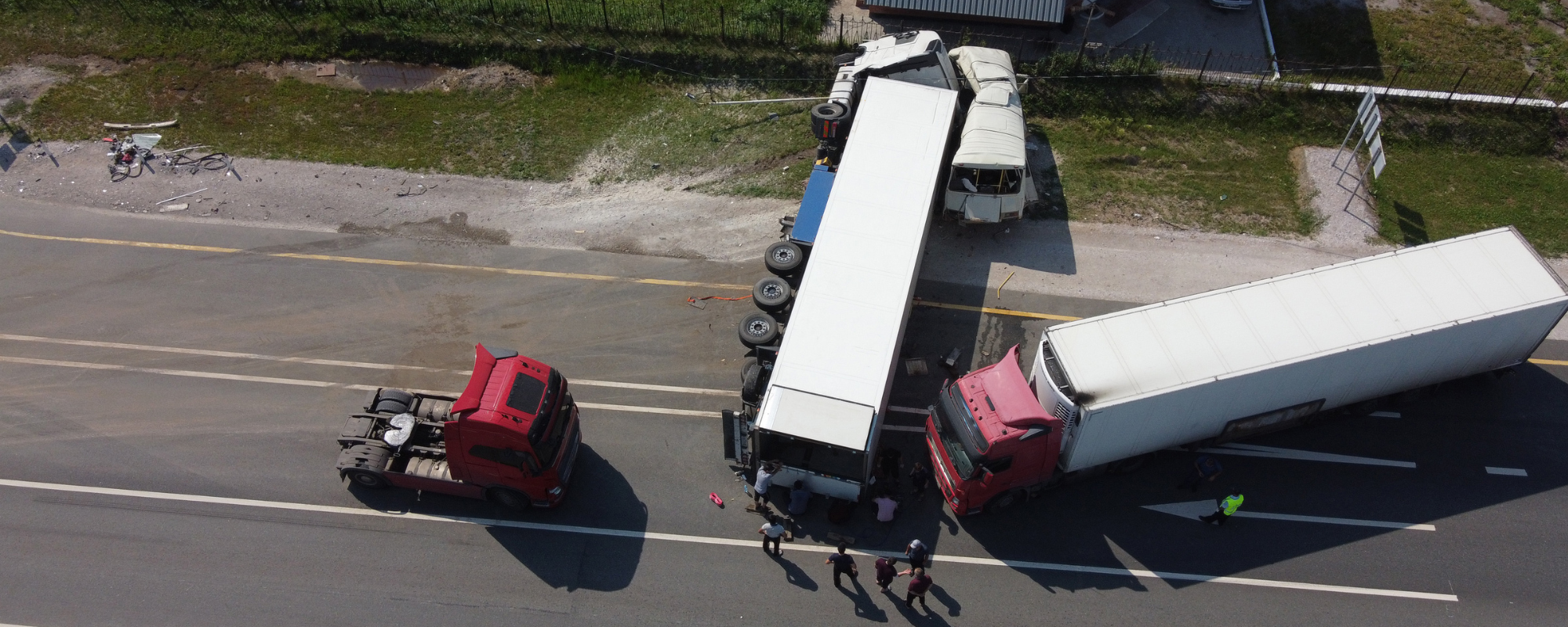
Commercial trucks in Texas follow two sets of rules.
Federal regulations from the Federal Motor Carrier Safety Administration (FMCSA) set the basic safety standards. Texas state law covers issues like liability, damages, and civil procedure.
Federal regulations are important in truck accident lawsuits because they create negligence per se. This means that if a trucking company or driver breaks an FMCSA rule, that violation alone can prove a breach of duty without needing more evidence of negligence.
The Key Federal Regulations That Shape Texas Truck Accident Cases
Knowing which federal rules apply and how breaking them can become evidence in your case is key to building a strong Texas truck accident lawsuit.
Hours of Service (HOS) Rules
FMCSA Hours of Service rules let truck drivers drive up to 11 hours within a 14-hour work window, with required rest breaks. Breaking these rules is one of the most common and strongest types of evidence in Texas truck accident cases.
HOS violations matter even more because of a trend many injured Texans do not know about. FMCSA closed 3,843 enforcement cases in 2024 but only 617 in 2025, which is an 84% drop in safety enforcement.
Electronic Logging Device (ELD) Requirements
Since December 2017, most commercial trucks have been required to use ELDs to automatically track driving hours.
ELD data is one of the most reliable and useful types of evidence in truck accident cases because it shows exactly when a driver was working, how long they drove, and if they changed their paper logs.
This data is only kept for a short time. Federal rules require carriers to keep ELD records for just six months, after which they can legally get rid of them.
Driver Qualification Standards
Trucking companies have to make sure every driver has a valid commercial driver’s license, meets FMCSA medical fitness rules, and has a good safety record before they start driving.
If a company hires someone who is not qualified or is disqualified, the company can be held directly responsible, not just the driver.
Vehicle Maintenance Requirements
Carriers have to keep up with vehicle maintenance on a strict federal schedule, record all repairs and inspections, and take unsafe vehicles out of service right away.
If a crash is caused by a brake failure, tire blowout, or steering problem, maintenance records become key evidence. Federal rules say carriers must keep these records for at least one year.
Mandatory Insurance Coverage
Federal rules say commercial trucks must have between $300,000 and $5,000,000 in liability insurance, depending on the type of vehicle and cargo.
Knowing all the available coverage, including extra policies and coverage from more than one responsible party, is one of the most important jobs for experienced truck accident lawyers.
Evidence Retention Deadlines
Federal rules say trucking companies only have to keep certain records for a set amount of time. Once that time is up, they are allowed to get rid of evidence that might help your case.
| Record Type | Federal Retention Period |
|---|---|
| Electronic Logging Device (ELD) data | 6 months |
| Hours-of-service records | 6 months |
| Vehicle maintenance records | 1 year after vehicle leaves fleet |
| Driver qualification files | 3 years after driver leaves employment |
| Drug and alcohol test results (positive) | 5 years |
| Drug and alcohol test results (negative) | 1 year |
Trucking companies send legal teams to crash scenes within hours of a serious accident. They do this to protect their interests before you have a chance to protect yours.
You need to send a formal evidence preservation demand within 48 hours.
How Federal Regulations Interact With Texas Law

Federal regulations do not give you the right to sue just because an FMCSA rule was broken. Still, breaking these rules can be strong evidence of negligence under Texas common law.
Texas uses a modified comparative negligence rule with a 51% bar. This means if you are found to be more than 50% at fault, you cannot recover any damages.
If federal rule violations show the truck driver or company is mainly responsible, it becomes much harder for the insurer to blame the victim.
In Texas, courts let regulatory violations count as negligence per se. This means the defendant must prove the violation did not cause the crash.
How Fielding Law Handles Federal Regulation Cases in Dallas
At Fielding Law, we know that the way federal regulations affect truck accident lawsuits in Texas is not just a theory.
It has real consequences for what evidence is kept, who can be held responsible, and how much your case may be worth.
Our truck accident attorneys move quickly after a crash to send preservation demands, collect ELD data, and check every part of regulatory compliance, including driver qualification files, maintenance records, and Hours of Service logs.
We also know that Texas commercial vehicles must carry between $300,000 and $5,000,000 in required insurance, and we work to recover the full amount for you.
We work on a contingency fee basis, so you do not pay unless we win your case. You can reach us anytime, day or night, at (877) 880-4090. Bite Back.
Frequently Asked Questions
These are the questions Texas truck accident victims ask most often about federal regulations and how they affect their case.
1. How do FMCSA regulations establish liability in a Texas truck accident case?
FMCSA regulation violations can establish negligence per se under Texas law. This means that the violation alone proves the defendant breached their duty of care, so no extra proof of negligence is needed.
Documented violations of Hours of Service limits, maintenance rules, or driver qualification standards give clear evidence that can strengthen liability claims and affect the damages that may be awarded.
2. How long do trucking companies have to keep accident records in Texas?
Retention periods are different for each type of record. ELD data and Hours of Service records must be kept for 6 months. Vehicle maintenance records are kept for 1 year.
Driver qualification files must be kept for 3 years after employment ends, and positive drug tests for 5 years. If there is a serious crash, you should send a formal evidence preservation demand within 48 hours.
3. Can I sue a trucking company directly for federal regulation violations in Texas?
Federal motor carrier safety regulations do not give you the right to file a civil lawsuit on their own. However, you can use violations of these regulations as evidence of negligence under Texas law.
If FMCSA violations contributed to a crash, it shows the defendant did not meet required safety standards. This can help support your claims for liability and damages under Texas tort law.
4. What is the 51% bar rule in Texas truck accident cases?
Texas uses a modified comparative negligence rule. If you are found to be more than 50% at fault for the accident, you cannot recover any damages.
If federal regulatory violations show that the truck driver or carrier is mainly responsible, it makes it harder for the insurer to blame the victim.
5. Why does FMCSA enforcement decline matter for Texas truck accident victims?
FMCSA closed 3,843 enforcement cases in 2024, but only 617 in 2025. This is an 84% drop in federal safety enforcement.
With fewer federal penalties for breaking regulations, holding trucking companies accountable now depends more on civil lawsuits.
For Texas truck accident victims, it is more important than ever to work with an attorney who understands federal regulations and can use them in court.